Wednesday, December 4, 2013

Land of America, Home of a Hmong

Imagine being a young child leaving your home and traveling to a new land. Walking off the plane and seeing snow for the very first time, you feel delighted and scared because Minnesota is nothing like anything you've experienced before. This is what happened to Xee. 

Xee Vue was born in Thailand in 1993. She immigrated to the United States with her parents and siblings when she was about 4 and a half years old. They arrived in St. Paul, Minnesota in December of 1997. Xee is now 20 years old and attends Metropolitan State University in St. Paul, Minnesota and she is planning on majoring in Elementary Education in hopes of influencing the younger generations.


FIRST DAY IN AMERICA

We came here in December, so the first thing I remember would be the snow. It was my first time seeing snow and that really gives off an impression. I was excited. In Thailand there’s only one season and we don’t get to see snow, but over here you get to see all four seasons. You get to see spring, summer, fall, and winter, and I like winter a lot.


Thailand


ADAPTING AND ADJUSTING

Coming to America was scary at first, but once you get used to it you’re pretty much okay with it. My dad thought that it was really important for his kids to receive better education so we came here for better opportunities and education. My dad went to high school and got his high school diploma and went to college for two years so he knows English a little here and there. It was hard learning English, I remember going to school and learning English and coming back from school and having my dad tutor me as well. I don’t speak English at home, I speak my home language, Hmong.


MAINTAINING TRADITIONS

My family and I still maintain our Hmong traditions. We still do our New Years ritual and have family gatherings. However, the New Years in Thailand is different from the New Years we have here in the United States. The New Years in Thailand lasted seven days and you would dress in your traditional clothing to represent who you are. And a guy would approach a girl and ball tossed with her in order to get to know each other. In comparison to that over here we only have the New Year's for three days and we have the pageant going on, dance competition, singing competition, food and market stalls. There's this jewelry that I wear with my Hmong clothing for the New Year that I really cherish. It's the silver necklace and the style and design is different according to gender. For the female, the silver necklace drape down from our neck all the way to our chest. Although, it's heavy it's something that my mother cherished a lot because it's like an heirloom that has been passed down from generation to generations. I remember that she would always nag at me if I ever got it dirty or tarnished because when I get marry, she would give me that and I'll pass it down to my kids. 


Xee and her siblings in their traditional Hmong clothing, circa 2004

We also kept our traditions of the process of Hmong funerals. In Thailand, we do not have coffins for the dead, so we just lay them out on the floor. The funeral lasts for a week or up to a month. Whereas, in America, the funeral lasts for only three days. The rituals are still the same. We dressed up the dead person in Hmong clothes and send their soul back to their homeland with a musical instrument called the qeej. The qeej would have to continuously be play to help the dead person trace their steps back to where they came from. Close families would gather around the coffin and mourn for the dead person and external families would sit around them. 
Since my grandpa is a Shaman, he can communicate with spirits and guardians. There's a superstitious in the Hmong culture that said we cannot trip at a funeral because spirits can follow us home and makes us very sick. If we were to trip, a special shaman chant must be carried out at that moment. When we come home we have to burn peppers outside of our doorsteps and walk over some dried peppers as we enter the house. We believed that ghosts and spirits are scare of spices so if they smell a spicy scent then they would lose their track and go away.


FAMILY STORIES FROM GRANDMA

My grandparents are in Thailand right now. I haven't visited them, but I plan to. We communicate about twice a month. My parents grew up [in Thailand] and they were born there too, so growing up we heard stories from my parents and grandparents. We would have family gatherings and my grandparents would gather all of us and tell stories about their life back in Thailand and Laos. The most interesting topic would be ghosts. They would tell us their experience with ghosts and the most interesting story would be the story about this ghost that takes the form of a monkey. I don't know the English name for it but in Hmong we call it Phim Nyuj Vais. It's an evil spirit that takes the form of a monkey, and that spirit usually comes after hunters. If you're in Thailand or Laos at night you can hear them scream and like talk during the night which is creepy. Those evil spirits usually come late at night and it would come disguised as a monkey or it can also disguise itself as a human. So my grandma was telling us about this one particular night where my grandpa went out hunting at night with his friends. They were hunting for squirrels and birds and ducks and turkey. It was the middle of the night and they were tired so they set up a campfire and started cooking dinner. My grandpa sat down and was talking about life, like what's going on in the community and what's to plan. There's only four of them that went together and as they were talking they started getting the chills. My grandpa's a Shaman and when he started having chills he was like, "What's going on?" All of a sudden it got really windy and you could hear dog howling and barking and all these other animal noises all throughout the whole night. They kind of got scared a little. My grandpa pretty much had an idea of what was going on so he burned some dry pepper, and it was said to be known that the Phim Nyuj Vais are scared of tofu. So he started burning the peppers and tofu, and as he was burning it he said these rituals and sayings that goes along with it. Right after, when he finished burning them the wind stopped and the barking stopped. So that pretty much gave them the idea that it was the evil spirits.


BEING "AMERICANIZED"

I consider myself pretty much Americanized. I define Americanized as being more open, more accepting and open to other cultures. There are certain levels of being traditional and going towards Americanized. My family is not really traditional. My grandparents are still really traditional Hmong. How we eat is different. My grandparents always have four different dish, and within those dish there has to be a certain fresh vegetable soup. But my parents are really open; we don’t have to have four different dish on the table, we don’t have to have that vegetable soup all the time, and we can eat anything we want. They’re more open to trying out new things like going to the State Fair. My grandparents would never go to the State Fair. They just don’t want to go, they want to stay within their circle and not go out of their comfort zone. Whereas, my parents try new things and we celebrate most of the American holidays such as Christmas. We have presents for Christmas, turkey on Thanksgiving, and we have a Christmas tree. So I would say we are pretty much adapting to the American society, we’re getting used to it as we grow.


BEING HMONG

I would say the definition of being Hmong is being free people. You’re not directed to one particular thing, you have the opportunity to reach for other things and accomplish a lot of other areas; whatever you want to do. We have a lot of opportunities out there for us, all we have to do is reach for it.

Xee and her sister are reaching for those opportunities
by furthering their education, circa 2011


STORY FACILITATORS:
Ashley Bienias, Justin Huey, Mai Lee Vue

Be True to Who You Are

Most people see 9/11 as a tragic day in history but for Samad it was his entry into a world of endless opportunities. Nine-Eleven of 2004 was when Samad followed his father’s path by moving to America. Samad’s father left Pakistan in 1984 to become a computer scientist, where he was later reunited with his wife, Samad and two other children. Their family resided in Eagan, Minnesota where they had to learn to incorporate the new American lifestyle into their faith based Muslim-Pakistani lifestyle. Urdu being his mother tongue, he was able to utilize the resources available, which allowed him to achieve his goal of higher education. Currently Samad is a fluent English speaker at the University of Minnesota aspiring to become a future doctor.


(6,833.96 Miles) (1)


Two Homes In my Heart


Many people in the United States and Pakistan have asked me whether I like the United States more than Pakistan or if I like Pakistan more than the United States. Every time my answer is the same, which is I like both countries equally. Pakistan is a place where my cultural identity originated from. That country gave birth to my cultural identity and made me who I am. At the same time, the United States has resources that helped me grow and develop as an individual. I think I define myself as an American now. I’m still Pakistani, that’s in my blood but I am an American-Pakistani. Meaning that I live here now and I am adjusted to it. Well, I would say this is my home now, Pakistan is my home too but this is my home now. The United States is the place where I want to study and grow as a human being. The United States is a place where I have less worries. An example would be, having 24 hours of electricity and not worrying about gas and water. My family and I were pretty well off in Pakistan but there was that worry in our minds. I have always valued my education and the United States has those resources to support that. At the same time, Pakistan is the place where my culture was born and renewed. I visited Pakistan this summer and stayed there for two months. I realized that visiting the place again, renews my cultural aspects. It is a reminder of who I am and where my roots came from. It is where I get my sense of cultural identity. It makes it more powerful because it reminds me who I am. America has gave me opportunities that other countries lack.


Home Of Opportunities


I was glad to take in the whole American lifestyle that I learned to lead here and the comforts of life. Basically the opportunities that are here. I would not give that up for anything, because I like having a vision and a goal in my head. I like knowing that there are resources out there that can help me achieve that goal. The education system definitely helped me. The knowledge that we gained is very broad; its a lot of different areas and it’s something that we learned as we go through.  Like all of the generals that we’re taking in college as of right now, is an opportunity that very few in Pakistan get. In terms of other opportunities, I have been able to participate in more activities here then I could have in Pakistan. So those opportunities are those small things that matter, and what are important and those are opportunities that you don’t get in other places.


American Dream


The American dream is more like what goals you set for yourself, who you are as a person, how you want to grow, and where you see yourself in the future. It’s just like that light at the end of the tunnel. That’s what you want to achieve. That’s where all the opportunities are. Eventually that is where you want be. People often try to build something better for themselves, rather than relying on their parents or on social status. Its the American mind set nowadays, like that’s the American dream, You want to achieve something. Basically that mostly depends on you and the socioeconomic status that plays into that but there are opportunities here that other countries do not give or the resources are not available. My dad was mainly here for the job aspect of it, so he came to the United States to make a home for himself as well as a better future for his family and that is what he wanted. We all have made our own American dream by moving to America. I want to pursue my field of being a doctor and that was not until I came to the United States that I discovered that. So I am taking a different route to fulfil my dreams and I would say I am very lucky to be here and its mainly because of my dad and the hard work that he put into it. The resources that are here are beneficial for not only myself but for my family as a whole and I always want what is best my family. So in the future if I have a family, and I can provide that here in the Unites States then I definitely will.


Don’t Lose Yourself


Ever since I was a young boy, my parents instilled the Muslim religious beliefs in me. I participate in all my religious practices here like I did back in Pakistan. My religious beliefs have always been solid in knowing the way I want to bring myself up as a person. I have assimilated into the American culture as much as I feel comfortable; there are certain things I do not want to assimilate into and there are certain parts that I have no desire to adopt. I do not have the desire to participate in the American holidays such as Christmas and Halloween. I am not going to leave behind a part of who I am to try to adopt something new. When I can make the two cultures coexist I will but I am not going to lose myself just because I am in a new place. One thing I have changed since moving here is how I interact with people. The difference between here and Pakistan in terms of interaction is very different. People are way more open here about their life then they are in Pakistan. When I went back to visit Pakistan I never felt like an outcast. I learned how to assimilate back into that lifestyle quickly. They could tell I had changed because of the way I interacted with people. Even though I am in America, I do not want to lose myself or my culture.

(The Qur’an- Book of Islam) (2)


My advice to individuals that move into a new culture is to stay true to who they are. Assimilate what you want and pick and choose because you do not want to do it based on social pressure or because other people pressure you to assimilate. Second, do not be hesitant to completely cut off the American Culture completely either. I am saying you should just be careful to not lose sight of yourself in this race to become assimilated into this new culture.

IMAGE CREDITS:

(1) http://www.distancefromto.net/distance-from/United+States/to/Pakistan
(2) http://www.kalamullah.com/al-quran.html

STORY FACILITATORS:
Kinzie Scearcy, Riham Kindy, Tenzin Tsondu


From Ethiopia To The UofM


In a corner of the semi quite basement of Coffman Memorial, at the University of Minnesota, our group pulled together a couple chairs to interview a fellow student, the roommate of one of our group members. Our interviewee requested that we change his name to Sollan Mcfarkane for the purpose of the project. Sollan, having been friends with Tyler, from our project group helped him become comfortable in sharing his stories with us. Tyler was familiar with Sollan’s journey to America but the rest of our group members were not so he began to tell us a little about himself.  

Journey to America

Basically I was born in Ethiopia, Addis Ababa to be specific. My parents were from two different part of the country. There was Oromo and Tigray. So I am part Oromo, part Tigray, Ethiopian as a whole.


I came here when I was thirteen with a DV visa. They (America) have lotteries and you get picked and come here. My older brother, he was older, I think he was 24 and the legal age limit was 21 to come here and he was not able to come. It was sad...It’s been five years and I have been trying to go back and everything but it’s hard. But both of my parents came over with me and we live in Minneapolis, Minnesota. They told me literally three months before we came here. That’s how sudden it was for me. They were preparing, like a whole yearlong and they told me at the last three-month. I don’t know…I think it was so I don’t say YEA WE ARE GOING TO… they told me three month before and I just had to say goodbye to everybody in three month. Sollan laughed … and then, in response to our question of whether he wished had known longer or if he had been nervous…he responded…
Oh yeah definitely, definitely. I wished I had known longer. Hell yea… I was really nervous. I mean I came here and I just stayed at my cousins’ house for three month when I came here. I mean it was the same culture and like the house was basically my cousins’ and they all speak the same language Amharic so it felt like home. But you know I adjusted throughout with them. And they helped me around.


Different people come to America for different reasons. Some come to seek protection escaping war zones, escaping natural disasters, etc. but others come to seek more opportunities to succeed educationally. In the places that they come from, the opportunities that are available even to the elites are not comparable to the opportunities available in America. So people leave their homelands seeking the promised opportunities of America.

“When I was back home I didn't value education as much”

Knowing that all immigrants have a drive that pushes them to make the long journey to America, we were interested in knowing what pushed Sollen’s family to come to America. When we asked him the question, with confidence and nodding his head in agreement his answer was simple…
Basically education. I mean my family was well back home. Like we had a pretty good life. The only reason they choose to come here was for my education.

There are differences in the education system between America and Ethiopia though. The main difference is basically that this is a first world country and it’s very advanced with things like electronically based essays. I never heard of essays in my life (he told us laughing) never wrote one and now it’s like what? Back when I was in Ethiopia, we didn’t like, you know how you switch classes every period? We didn’t do that back home. We had one classroom we just sit in and the teacher just switches. As he talked about the differences in school systems, his face lit up and he remembered a story and shared it with us. This one girl I knew, it’s a funny story. She didn’t know that and she just sat in her first period class, which was chemistry and she sat there the whole day and learned it four times and the teacher didn’t notice her. So she didn’t know that was the same class. And after a while he was like what are you doing here four times. It was funny. One of the hardest parts of the different education system here, he paused to think of how to complete his thoughts…we did have the huge midterms and exams at the end of the year. Here you guys have ACT, SAT, and that would decide your college transition but there we had two significant tests. Every year you have to take huge midterms, deciding whether you move on to the next year. At twelve grade you have one huge test; It concludes four years of high school. I think the SAT includes more of the general knowledge that you have learned. But that is like strictly what you have learned throughout the four years of high school and it’s a lot harder.


Sollan’s family came to America for his educational success. As the night went on he began to open up about his own perspectives on education.
When I was back home I didn't value education as much. I did go to school and everything but it wasn't that huge part of my life like when I came here. My family left everything they had for me, for education so it just became this whole thing I had to do. So every day after school, I study and stuff, you know, college was the dream, I had to go straight into college, graduate, like, it was the whole thing. When I was back home I was a very chill, American person, like in a very third world country. A chilled person you'll say. I was just about to get a job after high school, like construction because I love math and stuff. Now, I'm gonna major in electrical engineering. Coming here (to America) made it possible. Back home, not a lot of people went to school. I mean unless it is private school people, they went to college, because that was like basically part of that social class. I went to a public high school and most people from didn't go to college. Coming to America opened doors of opportunities for me and I believe for many immigrants.

As Americans living in the West where we have access to all kinds of technology, we know very little about the lives of others and their cultures. Around the world, people have access to things like American movies and shows that gives them an incomplete image of life in America. With that picture in mind many people come to America but soon realize that what they saw in the media was not the full representation of life in America. 

Incomplete picture of life in America

Knowing that many people, especially those coming from third world countries have an impression of life in America based on media influence, we asked Sollan if he found this to be true, in which he responded…
Oh hell, A lot, A lot, very A lot. Before I came here, my friends think they knew about America and made a perception through media and stuff. So they just think it’s party. I mean it is kind of party and stuff, but still they just think it only that. One of my friend asked how my prom was because he watches a lot of high school movies and stuff. People think life is very glamorous. I mean it kind of is, but it's not. When I came to America for example, I thought I was like everybody. Let's just take Christmas for example; because I thought when we were celebrating holidays here, I thought we were going to getting gifts and stuff…I didn't get any gifts at all. I mean even after I came here, I didn't get any gifts at all. That's how we celebrate it (back in Ethiopia) and coming here didn't even change it at all.


Also, in classrooms (schools), you see, I thought there was bullying and stuff, but that did not happen, I mean that didn't happen to me, I'm not saying it doesn't but yeah. After I came to America, I thought it was going to be a glamorous life.  My fiends still think that I am rich and stuff. I perceived that out here there was going to be a lot of money. Like the first year here we were on EBT cards. And after, my dad started working, but he wasn't working like a job that was making a lot of money. We weren’t living a poor life but a decent life. I don't try to tell my friends, I try to tell them it’s okay. I'm still trying to, trying to make money, trying to live myself as they are doing. You have to work for it; you gotta be educated. You don't sleep in money; it’s not like what it is.

Coming to America we know every immigrant comes with a dream no matter how far fetched it is. So we asked Sollan… what was his American dream before, and what is it now after couple of years living in America?
Before I came, I was thinking of living in this suburban house, you know, like 5 bedrooms, a huge house with a huge backyard, sunny every day like in Cali, you know? Just get toys every time, videos games, I mean, I don't know why, but definitely that's what I thought. I remember the first time I got here. I went to my uncle’s house and lived there for like 3 months. I’m like what, where our house? Where are we going to live? Where's our huge house? And I ended up going to an apartment, it was like oh damn.


Among many Americans, there is a misconception of who immigrants are and why they come here. Many fail to understand that being an immigrant is not easy and they are not any different than the mass. With our interview coming to an end we thought to ask Sollan one last question to close it off and that was his message to America as an immigrant youth...in which he responded saying…
As an immigrant we are just trying to survive you know, we are just trying to get educated and succeed and add on to the community and economy. Coming here especially for like teenagers, kids that come here they have a hard time adjusting. So I mean, People need to be supportive especially in classes if they need help. I wish I had some people to help me with my classes when I struggled.  


Image Credits:
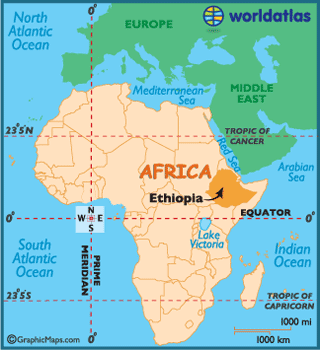
1. http://www.worldatlas.com/webimage/countrys/africa/etafrica.gif
2. http://newsimg.bbc.co.uk/media/images/45354000/jpg/_45354907_-5.jpg 
3. http://www.educationnews.org/wp-content/uploads/2013/08/ACT_SAT.jpg
4. https://blogger.googleusercontent.com/img/b/R29vZ2xl/AVvXsEjyGGZPPuyciiYCgtGO17p4u0R4BTzXqsPpPSMkdCTvl63jK7D34lvTX4W_3LecO8i5XMiuLg5H0xhBMBHI1oBiZIKZSqH87tXfzfIyifZBvwIz0hp3NXFvn4lMjhnqN3Uo-J_B4kVAKz7f/s400/xmas19.jpg 
5. http://organizeassim.blog.uol.com.br/images/pre.jpg
6. http://heritageaction.com/2013/07/hensarlings-plan-to-end-fannie-and-freddie-overcomes-first-hurdle-but-faces-another/
7. http://funeralparlour.com/FuneralParlour/Pictures/Blog/Ways-to-be-Supportive.jpg

Story Facilitators:

Kimiya Rabu, Tyler Geissler, Wang Vang


18 Years. All it Took was One Phone Call.

Map of Vietnam Highlighting Saigon
Imagine waiting 18 years to be legally allowed to immigrate to a country, only to find that your brother is too old and must be left behind. This became the reality for Victoria Le, born on May 2nd, 1992 in Saigon, Vietnam (1), who immigrated to the United States with her parents in 2010. Her brother, who is 11 years older than she was, had been over the age of 21 by the time the papers arrived and continues to reside in Vietnam til this day. With the help of her grandparents Victoria and her parents were given the opportunity to make a life in America.The following is derived from an hour long interview with Victoria and edited to share her family's history in Vietnam and their reestablishment in the United States as close to her words as possible. However, the names of the characters have been changed in respect to Victoria and her family's wishes and identity. 

Well, if they ask me I [am going to] tell them, but the thing is I think I am willing to tell them because they can learn something for old[er] generations. Young generations need to learn more experience, but if they are afraid to fail, they need to ask old[er] people. So we are willing to share with them. It’s better. So, I’m willing to do that.


AT THAT TIME THEY HAD EVERYTHING

My grandmother is a brave woman. During the war, the communist took everything and made Vietnam was so poor, so she sacrificed time with her children to earn enough money to provide for them. She would babysit for neighbor’s children, cook for schools and do many other small jobs. I personally really appreciate what she did for the whole family, just as much as what my grandfather had done.


Le, Victoria. Family Picture, circa 2010


My grandfather was a high ranked Vietnamese U.S. soldier during the Vietnam War for Bien Hoa City. His role was to capture, interrogate, and harshly punish the communists from the North. 

But, one day my mom witnessed it. She was home from school and tried to find my grandfather. She found that he was still working, and there was a lot of blood everywhere. My grandfather pushed her out of the room. But, she was so scared, she had a nightmare about it. My mom told me that she never went to look for her father at his workplace again.


She was scared of him for a while, but they lived a good life. He would go to many parties and drink a lot of wine with the other soldiers, since the U.S. government gave us a lot of things. My grandfather became rich, and life was great. He had nine children, five girls and four boys, my mom being the oldest. It is a really big family. However, he had the power to take care of the whole family. With his wealth, my mom could have a car to take her to school, sleep in her own bed, live in an air conditioned house and be served by a maid. 


Le, Victoria. Family Photo, circa 1989


Now both of my grandparents are U.S. citizens living in a Vietnamese community in North Carolina. They are too old to work, but they still share money with their children. Even though they are viewed as selfish by the Vietnamese community their generosity has provided fortunate lives for their children and grandchildren.


THE LOVE JUST BEGAN

After the Vietnam War, my father became a singer. He sang everywhere to help his mother out, since his family wasn't as wealthy as my mother’s. My dad sang for three days at a small concert and my mom just waited for him there. We don’t know what our parents did, but it just suddenly happened: the love just began. 


After my parents got married, my father realized singing would not be enough to support a wife and family, so he gave up singing and became a construction worker. But, Vietnam has very tropical weather, so the work was hard and made him very thin. He had that job for many years, yet his job never made us rich. 

After a few years of marriage, my parents gave birth to my brother and me. Since, my mom grew up in a rich family, she was not used to household tasks, but someone had to stay home to care of the babies. My mother learned slowly and after eating her cooking, my father helps her in the kitchen til this day. 


IN COMMUNIST COUNTRIES THERE IS NO FUTURE

I am left with a lot of terrible memories from my time in Vietnam. In communist countries, there is no future for old people or low income families. The rich look down on you if you are poor. They say bad things behind your back and sometimes to your face. We did not want to look for that and listen to them. We just wanted to get far away from them. We wanted to come here, to America. When I was in 8th grade, I quit public school to attend English school to prepare to come to the United States. But, when you study English in Vietnam, you only learn grammar. You don’t practice your speaking at all. So I could not speak when I came to America.


18 YEARS. WE LOSE HOPE.

In 1992, my grandparents brought my single aunts and uncles to the United States, since my grandfather’s involvement with the United States in the Vietnam War had allowed him to sponsor and pay for them. However, they left behind three families: my mom's, my aunt's and my uncle's. So, we stayed behind and applied to immigrate to the U.S. right after my grandparents arrived there. We waited 18 years to receive our papers, we all were so disappointed in everything. We lose hope.

I will always remember the night [the papers came]. 

I said to my mom, “Mom, I have some weird feeling. What’s going on? I can’t sleep.”

And my mom went over to the phone to call my Grandmother back, who shouted, “ I have your papers right now, they call us! You ready to come to the United States?"

“That’s the night that changed my life.”
  
In a few months we had to fill out a lot of papers, underwent health examinations, got shots, and were interviewed by the government. We all practiced before the interview to make sure none of us made any mistakes. We could not risk staying in Vietnam. I wanted to give up everything over there. I didn't care about countries anymore. I just cared about my family. So we rush[ed] here. But my brother had to stay behind. He is 11 years older than me and by the time we were able to legally come, he was over 21 years old. He had to stay there and could not come to America with us. It has been very hard being separated.

In 2010, my grandparents helped us get to North Carolina, and for a few months they gave us money to live on for rent, food, and absolutely everything. Meanwhile I worked in my aunt’s fast food restaurant in the mall. But soon after the mall closed down, so did her restaurant. There were no more jobs for my family and I could not attend high school because my mom had forgotten to acquire my school records, so no school in North Carolina believed that I had been educated.

WE HAD NOTHING
   
If we kept living in North Carolina, it seemed like we would never have a stable life. I needed to go to school right away to earn my high school diploma because after I turn 21 I cannot attend high school anymore, and my parents needed to find jobs. So my parents decided that since my mom had some close friends and family in Minnesota, we should move there. So we did. 

Upon arriving to Minnesota, I began to attend Minnesota High School. On my first day, I was really careful: I wrote all my classes and the instructions on how to get to the rooms, but I still had to ask a lot of teachers for help to find them. I even managed to get to my classes early, but no one sat near me. 

In my biology class, the teacher paired us up boy-girl boy-girl that day to work on a lab with our partners. We had to look at colors and do chemical stuff, but I had no clue what we were doing. I felt so bad because my partner, he did not say or ask me anything. I could not help him at all. Even though we were in the same high school, [it felt like] I lived in a different world. I was so embarrassed. There was a boy in front of us who was actually his friend that asked my partner, “How are you guys doing?”

And all my partner had to say was…
“This sucks.”
  

WHY SO DIFFERENT THAN MY SCHOOL IN VIETNAM?
 
Vietnamese schools are very strict compared to American schools. In my school in Vietnam, we would sit in the classroom all day, and a new teacher would come in to teach a lesson and then leave. If a student did anything wrong they would be punished. Getting out of my seat during the lesson would result in a call home to my parents and forced to stand outside of the classroom with a bucket of water on top of my head for 2 hours. When a student gets a bad grade the teacher is allowed to smack them with a ruler. But to make matters worse, all grades would be posted on a wall in order from highest to lowest for every student to see, to embarrass us into getting better grades. You want to run away. The teachers' involvement with us was very limited unless we had money, so only the rich could afford to improve.
As I was transitioning from Vietnamese to American schools, I noticed that asking for help was a regular thing. I was shocked because back in Vietnam there was no asking for help, we just had to figure it out for ourselves. But during my three years of high school, I was in ESL. I had a lot of friends because English was all of our second language.


I really wanted to learn, but for others it depended on the student in that class. If they did not care, their English would not be very good. But, my friend and I studied really hard and asked teachers for help so we could pass the English language barrier. 

My English is not as good as it could be, yet I have been able to graduate high school and am now a student at the University of Minnesota- Twin Cities to earn a bachelor's degree in computer science. I’m happy I went to American schools.


HERE EDUCATION IS THE WAY YOU GET THE AMERICAN DREAM

In America, knowing English has given me a large responsibility in my family because my parents do not know much English. I am an interpreter for my parents. I help translate bills, mail, and doctor and hospital visits along with anything else they may need. My parents are currently working in a fast food company, and since I am able to, I work when I am not in school to help them pay the bills. Everything is about money because you always need to go to the bank, but in Vietnam people just hold the money themselves. They don’t give it to a bank. We did not even know how banks work when we got here. 

In the beginning, my parents were scared of using a credit card because my relatives only told of the dangers of owning one if it is used irresponsibly. My parents were freaked out, so they said no credit card at all. However, I figured it out later. It’s really easy, but you need to be very careful with the money you use and pay it on time, so we can build credit to buy a house and a car later on.  

Our lives began to change from that point on. We love to eat American food: pizza, hot dogs, and hamburgers. I personally like it better than Vietnamese food. We listen to American music and love watching American shows. I find it really hard to balance between American and Vietnamese things. My family and I used to heavily practice Buddhism, but since we got here we broke those traditions. We don’t go to temple very much anymore. My mom always complains on the day, “Oh, I’m staying home, I don’t wanna go” because it is too cold to go out during the winter. Also, back when I lived in my country I used to receive a little red bag and it was “lucky money,” but I don’t anymore. (2)


I AM VIETNAMESE

There is a guy who is younger than me in my family, but I have to call him uncle because of the family kinship. He calls himself American, but I think that’s wrong because he was not born here. He came here earlier than me when he was three years old. He believes he is the same as anybody else in the country. I think he is confident, but he should not call himself American because of his eyes, skins, and culture. He still maintains Vietnamese culture. His parents still go to temples and eat Vietnamese food. However, I don’t think I am an American because I am half culture right now, and English is the tool that I use it to survive in this country. I have to build my future here. I have to call here home. It’s really hard to control the balance between both cultures because I like American things. When I go home, they all speak Vietnamese. I need to translate. I try to balance the two, but sometimes it’s hard, but I cannot lose either one. 


I consider myself Vietnamese, but I don’t think this matters because I just want to be myself.


BE READY

I have two cousins from Vietnam that are international students at the Washington University. They did not do anything to prepare themselves for America, and when they arrived they were so overwhelmed and scared they cried on the phone with my aunt for the first month. 

Be Ready! Don’t wait until the time you arrive in America to find out what’s going on. Just ask the people who went before you. If you don’t believe it go on your computer and investigate. Look at what other immigrants have said, talk to them, learn what is happening in American culture right now. But whatever you do, don’t let yourself struggle, because if you struggle it is really hard to move on, especially if you come here without your family. Don’t come on your own, help each other strive for something better.

I DO NOT WANT TO MAKE A PREDICTION, BUT I HOPE...

I will get my citizenship here because I am going to live and work here. That’s definitely the thing I want to do, but my parents don’t want to get it though. They want to go back and live in Vietnam because they were born there. In Vietnamese culture, wherever you were born, you need to go back and die there. 

I have not been back to Vietnam, since I arrived but I hope to visit my family in the next few years. I hope I will graduate college and make enough money to buy a house and sponsor my brother and his future family.

This is my story. I just speak whatever is on my mind.

FOOTNOTES

(1) Saigon, a city located in southern Vietnam
(2) Small red bags filled with money are given to friends and family during the Vietnamese New Year.

STORY FACILITATORS:
Nina Meltzer, Huan Shi, Berkley Edwards